

Dispelling root canal anxiety by explaining modern pain management techniques, the step-by-step procedure, and recovery guidelines.
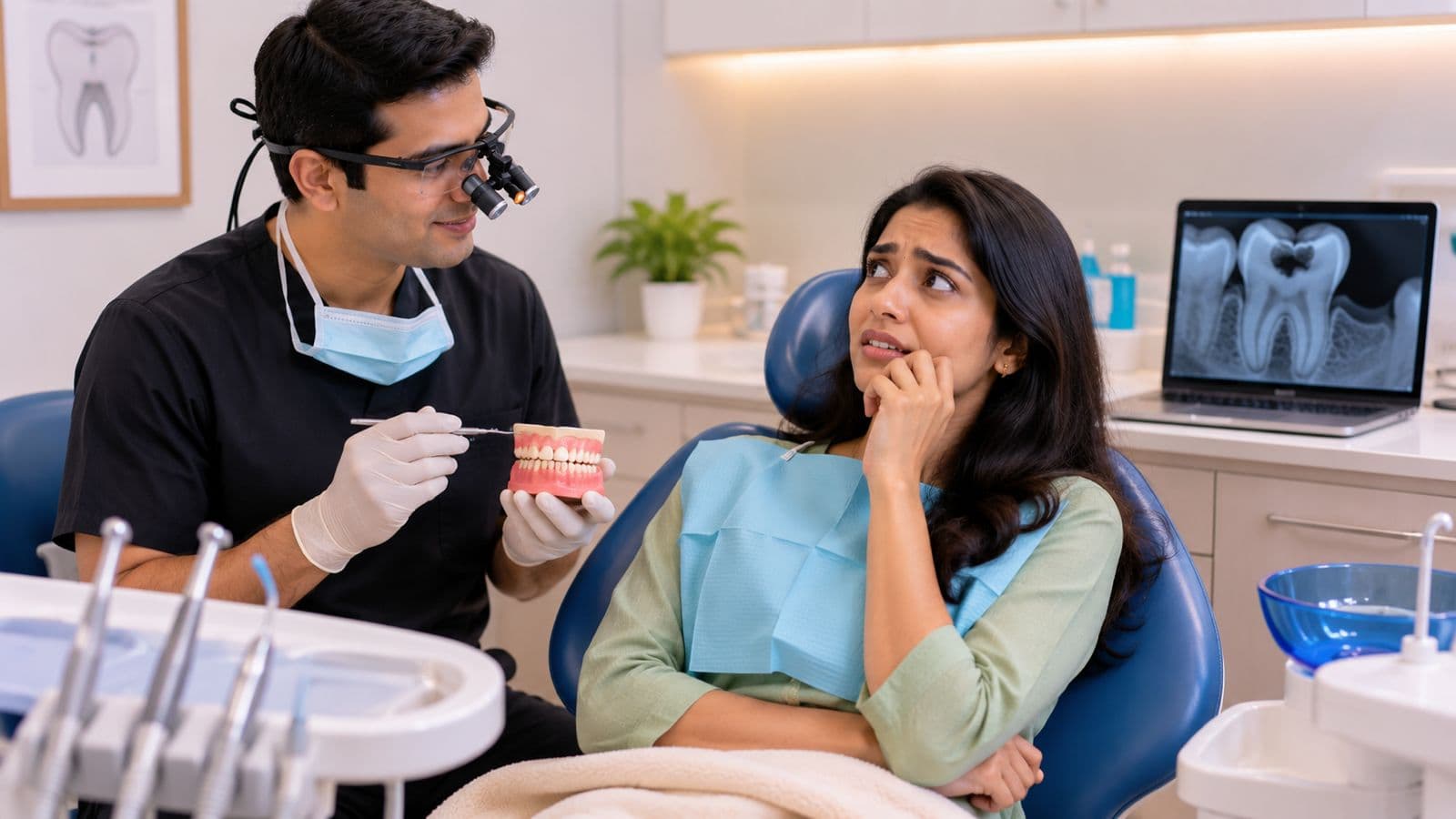
Root canal therapy often carries an outdated reputation for being a highly painful dental procedure. In clinical reality, modern endodontic advancements have transformed this treatment into a comfortable, routine experience that relieves pain rather than causing it. A Root Canal Treatment is one of the most reliable methods to save a severely damaged or infected tooth. By preserving the natural tooth structure, patients can maintain proper chewing function, avoid extractions, and prevent neighboring teeth from shifting.
For patients in Bangalore seeking lasting dental health, understanding this procedure can alleviate anxiety. Modern clinics combine specialized endodontic expertise with advanced diagnostics to deliver predictable, stress-free clinical outcomes. Let us explore the scientific facts, modern procedures, and advanced techniques that make this essential therapy highly successful and virtually comfortable.
Understanding root canal treatment and pain perception begins with recognizing that the procedure is designed to eliminate dental pain, not cause it. Many patients associate the treatment with discomfort because they confuse the pain of the active infection with the therapy used to resolve it. When a tooth's internal pulp becomes infected, it triggers a severe inflammatory response. This internal swelling cannot escape the hard shell of the tooth, resulting in intense pressure on the dental nerves.
Dental infections cause severe throbbing pain because bacteria penetrate the inner pulp tissue, creating high pressure and inflammation around the tooth's sensitive nerves. Clinical studies show that saving a natural tooth through timely endodontic intervention boasts an impressive 97% tooth survival rate. By removing the source of the infection, dentists can completely resolve the patient's discomfort and restore full dental function. Patients are often surprised to find that the discomfort disappears almost immediately after treatment begins.
Modern endodontic techniques ensure painless treatment through the use of advanced local anesthetics and microscopic technologies that completely numb the target area. Today's dental practices utilize highly refined anesthetic solutions that offer superior tissue penetration and profound pulpal anesthesia. Electronic apex locators measure the exact length of the root canal, allowing the endodontist to clean the canal precisely without irritating the root tip. Rotary endodontic instruments made of flexible nickel-titanium alloy are also used to shape the canals smoothly and quickly.
Once the local anesthetic takes full effect, the physical sensation of the treatment is no different than receiving a standard dental filling. Dentists use precise diagnostic tools like digital radiography and 3D cone-beam computed tomography to map the root anatomy beforehand. This careful mapping allows the clinician to locate every canal with extreme precision, avoiding unnecessary irritation of the surrounding tissues. For patients with high dental anxiety, sedation options like nitrous oxide are readily available to keep patients in a deeply relaxed state.
The integration of Laser Dentistry into endodontics provides maximum disinfection and comfort by using focused light energy to sterilize the root canals painlessly. Dental lasers emit specific wavelengths of light that target and eliminate bacteria deep within the microscopic dentinal tubules. This high-precision approach sterilizes the canal root system while preserving more of the natural dentin structure. By minimizing the need for aggressive mechanical scraping, lasers reduce physical vibration and friction, making the treatment much gentler.
Patients who receive laser-assisted endodontic therapy often report significantly less post-operative sensitivity and faster healing times. The laser energy also helps seal the dentinal tubules and biostimulate the surrounding tissues, promoting quicker cellular repair. This advanced modality represents the cutting edge of modern endodontics, combining absolute sterility with patient comfort. Choosing a clinic that utilizes laser technology ensures a higher success rate and a more pleasant clinical experience.
During a standard root canal procedure, which typically takes between 45 and 60 minutes, the dentist isolates the tooth, removes infected pulp, and seals the root canal space. First, a local anesthetic is administered to ensure complete numbness, followed by the placement of a protective rubber dam to keep the tooth dry. Next, the dentist creates a small, precise opening in the crown of the tooth to access the diseased pulp chamber. Using micro-instruments, the inflamed nerve tissues are gently removed, and the canals are meticulously disinfected.
Once the canals are thoroughly cleaned and dried, they are filled with a biocompatible material called gutta-percha to prevent future bacterial entry. In some cases of severe infection, an antibacterial medication is placed inside the tooth, and it is sealed with a temporary filling for a week. This single-visit or two-visit procedure is highly streamlined, utilizing digital imaging to verify the placement at each step. This efficient process ensures the tooth is fully stabilized while minimizing the patient's time in the dental chair.
Post-treatment recovery from a root canal is generally rapid, with the vast majority of patients experiencing significant pain relief within 24 hours. While the treated tooth may feel slightly tender or sensitive for a few days, this minor discomfort is easily managed with standard over-the-counter pain relievers. Patients are advised to avoid chewing on the treated side until the tooth has been fully restored with a permanent restoration. Maintaining excellent oral hygiene, including twice-daily brushing and daily flossing, is critical during this healing phase.
Clinical data indicates that post-operative sensitivity is temporary and resolves completely as the surrounding bone and ligament heal. If pain persists or worsens after a few days, patients should contact their dentist for a quick evaluation. However, complications are rare when the procedure is performed by an experienced endodontist using modern protocols. Following the recommended post-treatment guidelines ensures that the tooth heals properly and remains functional for a lifetime.
Placing a custom dental crown over a treated tooth is essential for protecting its weakened structure and ensuring a high clinical success rate. Because the tooth no longer has a live pulp, it becomes more brittle over time and is susceptible to fracturing under normal chewing forces. A high-quality custom dental crown provides a protective cap that restores the tooth's full chewing strength and natural appearance. When properly fabricated and maintained, a post-op crown lasts 10-15 years or even longer.
Protecting your tooth with a crown is the final step in ensuring the lifetime comfort and utility of your endodontic treatment. In some cases, a patient may eventually require more comprehensive restorations, such as Full Mouth Rehabilitation, if multiple teeth are damaged. However, for a single tooth, a root canal followed by a crown is the gold standard of conservative dental care. Investing in a quality crown protects your endodontic investment and preserves your natural smile.
To discuss root canal treatment with Dr. Srinivas, book a consultation at Maxface Dental Clinic, Bangalore.
No, a root canal is not painful because modern local anesthetics completely numb the tooth and surrounding tissues before treatment begins. Most patients report that the sensation is identical to receiving a standard dental filling. Many feel immediate relief from their chronic toothache as soon as the anesthetic takes effect.
Most patients recover quickly and experience significant pain relief within 24 hours after the procedure. You may feel mild tenderness or sensitivity for a few days, which is easily managed with over-the-counter pain relievers. You should avoid chewing on the treated tooth until a permanent crown is placed.
Yes, placing a custom dental crown is highly recommended to protect the treated tooth from fracturing under chewing pressure. Since the tooth no longer contains a live pulp, it becomes brittle over time. A quality crown restores full chewing strength and can last 10 to 15 years with proper care.
Medically Reviewed By
MDS Prosthodontics, Fellow & Diplomate ICOI (USA) · Chief Implantologist · Last updated: May 2026
Dr. B. Srinivas Rao co-authored the landmark 1st Global Consensus for Clinical Guidelines on rehabilitating the completely toothless upper jaw — published in Clinical Oral Implants Research, 2026.
A systematic review co-authored by Dr. B. Srinivas Rao evaluating whether high-performance polymers PEEK and PEKK can serve as viable alternatives to metal frameworks in complete-arch implant-supported fixed dental prostheses.
A finite element analysis comparing stress distribution patterns in implant-supported fixed dental prostheses made with zirconia and PEEK frameworks — revealing how material choice impacts long-term implant health.