
Full mouth dental implants in Bangalore: Compare All-on-4 vs All-on-6 procedures. Learn how Dr. Srinivas Rao selects the optimal full arch treatment.
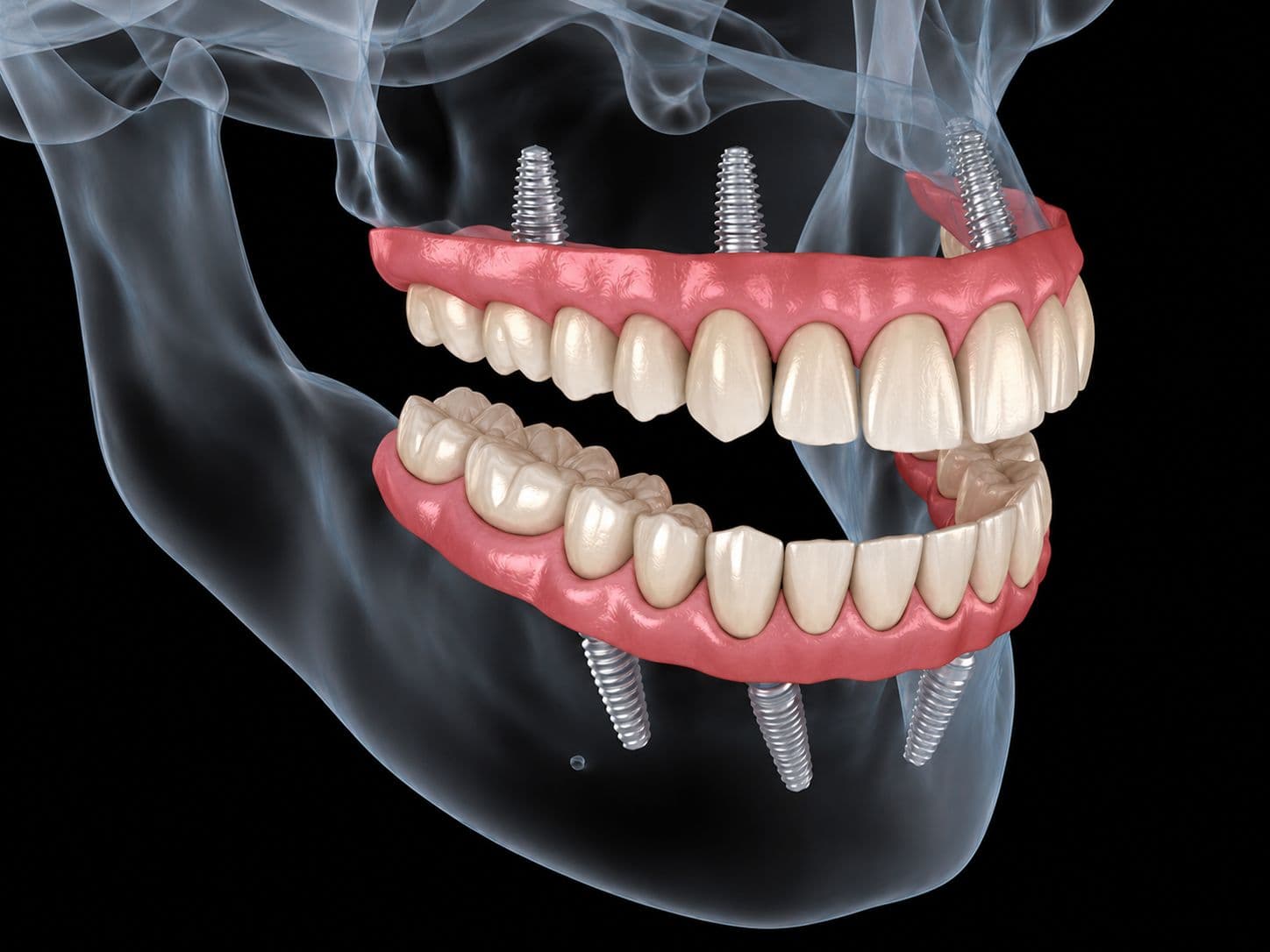
For individuals suffering from widespread tooth loss, advanced periodontal disease, or failing dental bridges, full arch tooth replacement restores not only the ability to chew comfortably but also natural facial symmetry and self-confidence. When considering full mouth dental implants in Bangalore, patients frequently encounter two leading clinical treatment concepts: All-on-4 and All-on-6.
Both procedures replace an entire arch of teeth with a non-removable, custom-crafted prosthetic bridge secured by biocompatible titanium posts. However, deciding between four or six implants is not a matter of personal preference or generic package deals. It requires a detailed 3D radiographic assessment of your jawbone density, bite mechanics, and skeletal anatomy. In this expert clinical guide, we compare All-on-4 and All-on-6 side by side to help you understand which treatment approach is ideal for your smile.
Full mouth dental implants are fixed prosthodontic rehabilitations that replace an entire upper or lower arch of missing teeth using a strategically anchored bridge supported by four to eight titanium implant posts. Unlike removable dentures that rest loosely on gum tissue and cause progressive jawbone shrinkage, implant-supported bridges lock permanently into the facial skeleton.
By anchoring directly into the jawbone, titanium implants stimulate surrounding bone tissue through a biological process called osseointegration. This prevents facial collapse, eliminates denture slippage, and restores up to 95% of natural chewing force.
A complete full-mouth reconstruction replaces all 14 teeth per arch using a single monolithic ceramic or zirconia bridge framework. Rather than placing 14 individual implants—which would be surgically unnecessary and bone-prohibitive—the bridge relies on strategic load distribution across 4, 6, or 8 posts.
When teeth are lost, the alveolar jawbone naturally undergoes progressive resorption, losing up to 40% of its volume within the first year alone. Full mouth implant bridges halt this bone loss, maintaining youthful facial height, lip fullness, cheek contours, and chin projection.
To explore comprehensive full arch reconstruction options, visit our primary Full Mouth Rehabilitation Guide.
All-on-4 dental implant technology utilizes four titanium implant posts per jaw—two straight anterior implants and two posterior implants tilted at 30 to 45 degrees—to maximize available native bone and avoid bone grafting. Pioneered by Portuguese implantologist Dr. Paulo Maló in partnership with Nobel Biocare, All-on-4 revolutionized reconstructive dentistry.
The key innovation of All-on-4 lies in tilting the two posterior implants:
• Anatomical Sinus & Nerve Avoidance: Tilting the rear implants angled back at 30° to 45° allows the surgeon to anchor into dense anterior bone while steering clear of the maxillary sinus cavity in the upper jaw and the mental nerve in the lower jaw.
• Elimination of Bone Grafting: By utilizing existing native bone, All-on-4 eliminates the need for sinus lifts or bone block grafts in moderate bone loss cases.
• Immediate Loading Capability: Tilted implants engage dense anterior cortical bone, achieving high primary stability ($ge 35 ext{ Ncm}$) for 24-hour provisional bridge attachment.
• Optimized Cantilever Dynamics: Posterior tilting moves the prosthetic abutment emergence further back into the molar region, reducing prosthetic cantilever length.
Specialized multi-unit abutments are screwed onto the tilted posterior implants to correct the 30° to 45° angle, ensuring that the final screw-retained bridge sits completely flat against the implant platforms.
By anchoring the tilted posterior implants into the dense canine and premolar bone pillars (nasomaxillary buttresses), All-on-4 achieves rigid bicortical fixation without invasive sinus elevation.
All-on-6 dental implant technology anchors a full arch bridge using six titanium implant posts, providing broader occlusal load distribution and increased mechanical redundancy for patients with adequate bone volume. Placing six implants creates six solid pillar supports distributed evenly from molar to molar across the jaw arch.
Key clinical benefits of the All-on-6 configuration include:
• Broader Masticatory Force Distribution: Spreading heavy chewing forces across six anchor posts reduces stress concentration per implant, protecting surrounding bone tissue.
• Optimal for Softer Upper Jawbone: The maxilla naturally possesses softer, porous bone (Type 3 or Type 4). Two extra implants provide vital reinforcement against micro-movement.
• Mechanical Redundancy: Having six support posts creates a safety cushion. In the rare event that one implant experiences biological or mechanical complications, the remaining five posts can often support the bridge without immediate prosthetic failure.
• Segmented Bridge Design Option: Six implants allow the final restoration to be divided into two or three separate prosthetic bridges, simplifying future maintenance if needed.
By distributing chewing load across six fixtures, All-on-6 reduces peak bending moments on individual abutment screws during heavy mastication.
Comparing All-on-4 and All-on-6 reveals key trade-offs between bone volume requirements, chewing force distribution, surgical invasiveness, and prosthetic failure redundancy. Neither treatment is universally superior; each protocol addresses specific anatomical bone profiles.
The table below details the clinical differences between All-on-4 and All-on-6 systems:
| Clinical Criteria | All-on-4 Protocol | All-on-6 Protocol |
|---|---|---|
| Number of Implants | 4 Titanium Posts per Arch | 6 Titanium Posts per Arch |
| Bone Volume Requirement | Minimal to Moderate (Tilted Rear) | Moderate to Substantial |
| Bone Grafting Necessity | Rarely Required (Graftless) | May require localized sinus lift |
| Chewing Force Distribution | Concentrated over 4 anchor points | Broadly distributed over 6 points |
| Mechanical Redundancy | Low (Critical dependency per post) | High (Safety margin if one post fails) |
| Ideal Anatomical Location | Mandible (Dense Lower Jaw) | Maxilla (Softer Upper Jaw) |
| Surgical Invasiveness | Slightly lower surgical footprint | Slightly higher surgical footprint |
For single-tooth or localized replacement options, explore our Dental Implants Overview.
Selecting the ideal prosthetic framework material determines the aesthetic translucency, durability, and shock absorption of your full mouth restoration. At Maxface, full arch bridges are fabricated using three advanced material options:
• Monolithic Zirconia (CAD/CAM): Milled from solid blocks of ultra-translucent zirconia, these bridges offer extreme flexural strength (exceeding 1200 MPa), zero chipping risks, and natural tooth aesthetics.
• Titanium Substructure with Composite Teeth: Combines a light precision-milled titanium bar with resilient composite crowns for easy repairability and cushioned bite contact.
• PEEK & PEKK High-Performance Polymers: Polyetheretherketone provides an elastic modulus similar to natural human bone, absorbing heavy chewing shocks and protecting opposing teeth.
Occlusal force dynamics in full mouth rehabilitations determine how masticatory bite pressure is transferred from the artificial tooth bridge into the underlying facial bone. Humans exert bite forces between 200 and 600 Newtons during routine mastication, with peak bruxism forces exceeding 800 Newtons.
In All-on-4, the cantilevered posterior section of the bridge must be limited to 10mm–12mm to prevent excessive leverage forces on the tilted rear implants. In All-on-6, placing two additional implants in the first molar positions eliminates cantilever extensions, resulting in balanced stress distribution across the posterior chewing zones.
Upper versus lower jaw anatomical differences dictate whether All-on-4 or All-on-6 provides superior long-term biomechanical stability. The lower jaw (mandible) is composed of thick, dense cortical bone (Type 1 or Type 2 D-bone) with a high modulus of elasticity, making four implants highly stable.
In contrast, the upper jaw (maxilla) consists of thinner cortical plates enclosing soft, spongy trabecular bone (Type 3 or Type 4 D-bone). Furthermore, the upper jaw houses expanding maxillary sinuses. For this reason, clinicians frequently recommend All-on-6 for upper jaw rehabilitations to spread occlusal loads over six anchor points unless severe bone loss necessitates tilted All-on-4 or Zygomatic Implants.
The decision between All-on-4 and All-on-6 is determined through 3D CBCT volumetric bone density analysis, jaw arch geometry, muscle bite force, and anatomical sinus placement. At Maxface Dental Clinic, we do not rely on guesswork or predefined sales packages.
Four diagnostic parameters guide treatment selection:
1. Jawbone Density & Quality (D1–D4): Dense cortical bone in the lower jaw (D1/D2) provides outstanding primary stability for All-on-4. Softer, cancellous bone in the upper jaw (D3/D4) often dictates All-on-6 for added safety.
2. Volumetric Bone Height & Width: High-resolution 3D CBCT scans measure exact bone dimensions. If posterior bone height is under 4mm, All-on-4 avoids sinus grafting. If bone width allows 6 implants without grafting, All-on-6 is favored.
3. Bite Force & Bruxism History: Patients with strong jaw muscles or nocturnal teeth grinding (bruxism) benefit from All-on-6 to dissipate heavy vertical occlusal forces.
4. Severe Bone Loss Alternatives: In cases of extreme upper jaw atrophy where neither 4 nor 6 standard implants can find anchorage, Zygomatic Implants provide a graftless cheekbone solution.
Post-surgical healing timelines and oral hygiene protocols ensure long-term mucosal health and prevent peri-implant mucositis. Following initial surgical placement, bone tissue undergoes cellular remodeling over 3 to 6 months to achieve complete osseointegration.
During this healing period, patients wear their fixed acrylic provisional bridge, adhering to a soft-diet protocol. Once complete bone fusion is confirmed via 3D CBCT scan, the provisional bridge is upgraded to a final high-strength monolithic Zirconia or titanium-reinforced PEEK prosthetic.
Patients are fitted with custom nightguards if bruxism is present, ensuring that nocturnal jaw clenching does not cause mechanical fatigue to multi-unit abutment screws or ceramic crowns over time.
Prosthodontist-led planning ensures that full mouth implant placement is prosthetically driven to support proper temporomandibular joint (TMJ) alignment, facial aesthetics, and long-term chewing mechanics. A Prosthodontist is an MDS-trained dental specialist dedicated strictly to tooth replacement and bite reconstruction.
A general dentist may focus solely on finding available bone to insert implant posts. A Prosthodontist works backward from the desired smile: designing the ideal 3D positions of the teeth, establishing correct vertical jaw dimension, and then guiding implant placement to support the final CAD/CAM zirconia bridge perfectly.
By establishing accurate bite alignment and vertical dimension of occlusion (VDO), the prosthodontist prevents facial sagging, lip collapse, and chronic jaw joint (TMJ) dysfunction.
At Maxface Dental Clinic, chief surgeon Dr. B. Srinivas Rao, MDS, brings Sweden-trained prosthodontic expertise and ICOI Diplomate credentials to every full mouth rehabilitation case.
The Maxface approach to full arch rehabilitation in Kasturinagar, Bangalore, combines 3D CBCT computer simulation, sub-micron iTero optical scanning, and Sweden-protocol surgical execution by Dr. B. Srinivas Rao. Located centrally in East Bangalore, Maxface Clinic delivers world-class care in a soothing, dark-luxury environment.
3D computer-guided surgical templates are printed in-house to guide drill angle and depth down to sub-millimeter precision. This eliminates intra-operative guesswork, minimizes soft tissue trauma, and reduces surgical time per arch to under 45 minutes.
Our full mouth rehabilitation protocol follows three strict standards:
• Digital CAD/CAM Precision: 100% optical iTero Lumina intraoral scanning eliminates uncomfortable putty impressions and ensures perfect prosthetic fit.
• Monolithic Zirconia & PEEK Frameworks: We utilize medical-grade titanium posts paired with biocompatible zirconia or PEEK bridges for maximum aesthetics and strength.
• Documented 98.2% Success Rate: Surgical procedures follow Scandinavian protocols refined over two decades of clinical leadership.
Schedule your thorough 3D diagnostic evaluation today to discover whether All-on-4 or All-on-6 is the ideal solution for your smile.
Neither system is universally 'better'; each serves specific clinical indications. All-on-4 is ideal for patients with moderate bone loss because tilted posterior implants bypass the sinus without bone grafts. All-on-6 is preferred when adequate bone density is present, offering broader load distribution and additional redundancy if one implant post experiences complications.
Full mouth titanium implants are designed to be a permanent, lifetime tooth replacement solution. Custom CAD/CAM zirconia prosthetic bridges typically last 20 to 25 years or longer with regular oral hygiene and 6-month clinical maintenance checkups.
Yes. In both All-on-4 and All-on-6 procedures, if primary insertion torque exceeds 35 to 45 Ncm, an immediate-loading protocol is followed. A rigid, custom provisional bridge is attached within 24 hours of surgery, allowing you to walk out with functional fixed teeth.
All-on-4 was specifically engineered to avoid bone grafting by tilting the two rear implants at 30 to 45 degrees into existing dense bone. All-on-6 may require localized bone grafting if bone height is insufficient. In cases of severe bone atrophy, Zygomatic implants provide a completely graftless alternative.
The upper jawbone (maxilla) is naturally softer and less dense (Type 3 or Type 4 bone) compared to the lower jaw (mandible). Placing six implants spreads heavy chewing forces over two additional anchor points, reducing stress concentrations in softer upper bone.
In an All-on-6 bridge, the remaining five implants often maintain structural stability, allowing the failed post to be replaced without compromising the entire bridge. In All-on-4, losing one post requires immediate intervention, though prompt specialized care can re-anchor the bridge predictably.
Care for full arch implant bridges involves daily brushing with a low-abrasive toothpaste, using an intraoral water flosser to clean beneath the bridge, using interdental brushes around multi-unit abutments, and visiting Maxface Clinic every 6 months for professional cleaning and occlusal checks.
Medically Reviewed By
MDS Prosthodontics, Fellow & Diplomate ICOI (USA) · Chief Implantologist · Last updated: May 2026
Find the best dental implant clinic in Bangalore. Maxface Clinic offers Sweden-trained prosthodontic expertise and 3D digital implant planning.
Zygomatic implants in Bangalore offer a graftless solution for severe upper jawbone loss. Learn how Dr. Srinivas Rao provides immediate fixed teeth.
A clinical case series by Dr. B. Srinivas Rao demonstrating how patients with severely resorbed jawbones — previously told they cannot receive implants — were successfully rehabilitated using zygomatic implants and the All-on-4 treatment concept.